
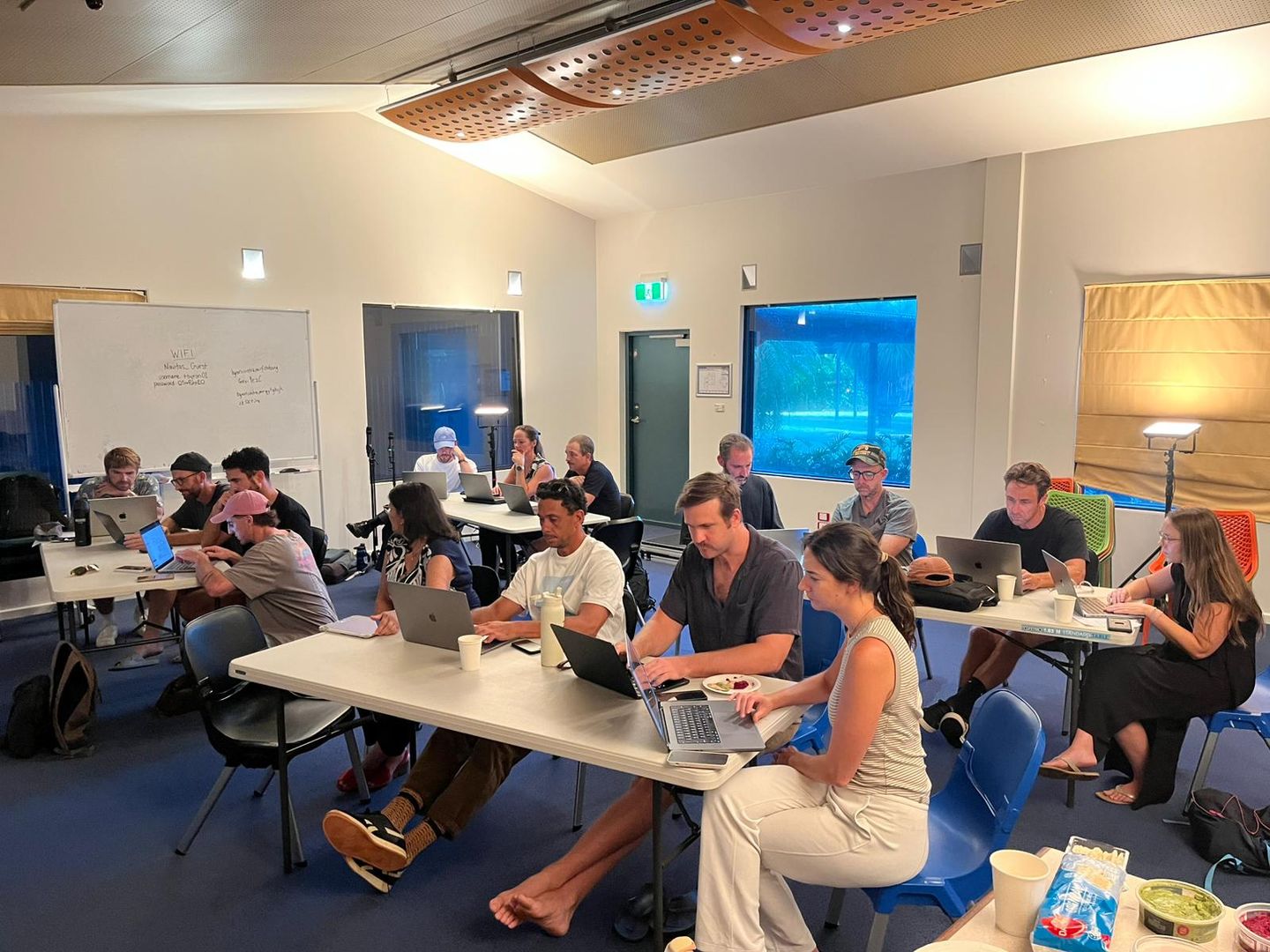
I’ve been spending a lot of time under the hood with AI: building, testing, getting frustrated and occasionally experiencing frontier-model-induced brain fry.
What keeps me there is the relationship between what AI is becoming capable of and what businesses need to make use of it.
What the latest models put within reach
Recent frontier releases show advances in carrying work through several steps. OpenAI describes Astra’s improvements in navigating applications, producing documents and building and testing websites. Anthropic reports stronger coding, research and sustained problem-solving with Claude Fable 5.1. These are the developers’ reported results; reliability in a particular business still needs testing. OpenAI · Anthropic
For small and medium businesses, my reading is that this expands what is worth exploring: investigating customer feedback, connecting information across a process, or developing something around a specific business need.
There is creative possibility here too. People can bring their own experience and ideas into services and ways of working they can build and test.
But how much of that possibility is reaching everyday business?
What small and medium businesses are doing
A May 2026 survey of 343 Hong Kong SMEs found 23% had adopted AI, with another 32% planning to. Among adopters, marketing and content creation were the most common uses, followed by customer service. Process automation and workflow improvement were much less common, at 14%. Businesses yet to adopt cited gaps in knowledge and skills, uncertain returns and limited time or resources. Survey coverage
There are also signs of deeper use. JPMorganChase Institute’s April research on US small businesses found increasingly consistent payments for AI services and expanding use of multiple services. The researchers interpret this as a possible sign of AI becoming part of operations. Spending patterns cannot tell us whether the work actually improved. Read the research
These studies cover different markets and business sizes. They suggest an uneven transition, with experimentation and more established use happening alongside each other.
In Australia, Jim Chalmers’s recent opinion piece explicitly identified skills and barriers to SME adoption. ACS Digital Pulse also emphasises continuing skills development. The UK’s new AI procurement competitions bring another part into focus: testing promising technology in real operational settings. Treasury · ACS · UK announcement
Taken together, this leaves me asking what helps a business turn growing capability into useful, repeatable work.
What I’m working out under the hood
That question is shaping my work through The Signal Studio: how information is captured and connected, how work gets done, and where people need to make decisions.
Take marketing. A more capable model can help assess campaign ideas, but it needs relevant knowledge about the customers, brand and business. Someone needs to decide what information belongs there, keep it useful and review the result.
That also shapes Build Your AI Marketing Practice at The Remix. People bring a real marketing priority and develop and test a way of working with AI around it.
Choose one piece of work where AI could help, bring together the information it needs, and test whether it makes a useful difference. Tell me what you’re trying and learning. You can join Build Your AI Marketing Practice to explore this with others, or work with The Signal Studio to put AI to work across your business. And if you haven’t already, sign up to The Signal newsletter for the research and what we’re learning along the way.
Michelle